
Hello everyone from you long lost Super Speechie.
I didn’t realize that its been almost 6 months since our last blog, but it is proof of how busy we are making a difference and helping people find their voices.
Happy Women’s Month, a month that we celebrate the strength, achievements, and boundless potential of women everywhere. I want to share with you the story of how I became the woman I am, shaped and inspired by the incredible women in my life, and to shine a light on the unique challenges faced by girls and women with ADHD and autism.
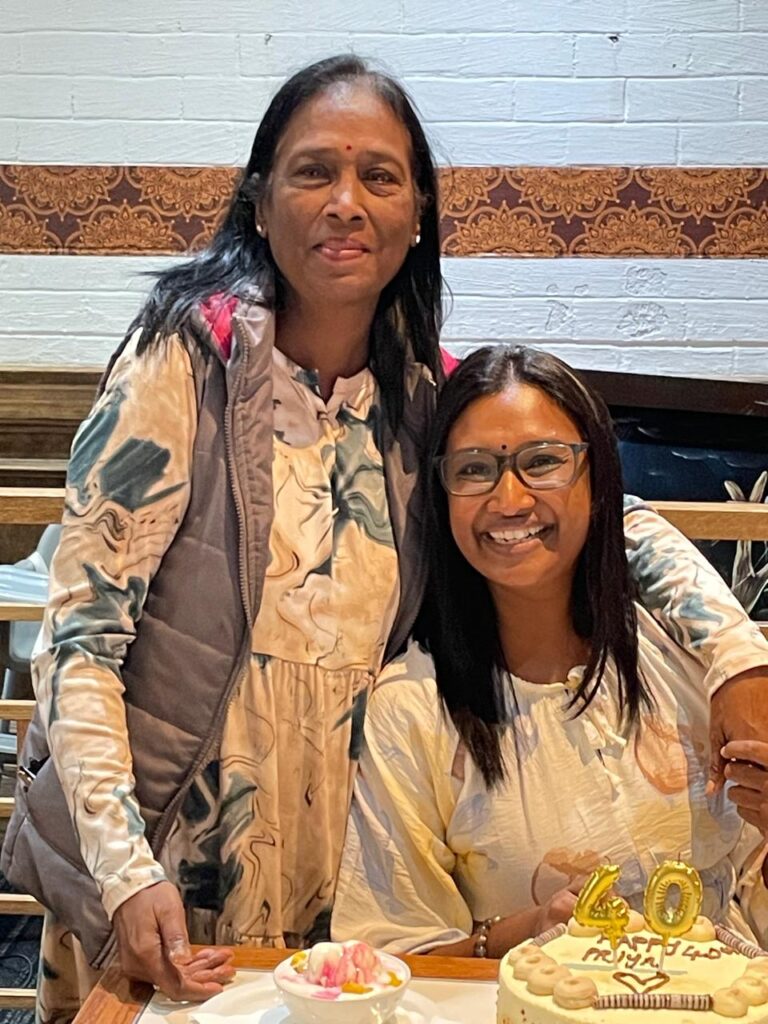
If I could trace the roots of my resilience and strength, they would lead straight to my mother—a retired nurse who dedicated her career to caring for others. Her compassion and work ethic were evident in everything she did, both at home and in our neighbourhood. Through her example, she taught me the power of service, the importance of treating every person with dignity, and the quiet heroism that comes from helping those most in need.
Her dedication to her patients and her tireless commitment to our community left a powerful impression on me. She showed me that a strong woman is not defined only by her accomplishments, but by the lives she touches along the way. In her, I saw a wellspring of empathy and resilience—a legacy I carry with me every day.
As I ventured beyond the safe harbour of home into my own professional world, I found myself following a similar path of service. As a speech therapist, I first started working in the government sector, where I spent the first 10 years of my career, I encountered people from all walks of life and witnessed first-hand the impact that communication has on dignity, opportunity, and connection.
In my career, I have been privileged to work alongside remarkable women—mentors and peers—whose wisdom, courage, and camaraderie have shaped me profoundly. These colleagues in the government sector brought their strength to public service, often working tirelessly in challenging settings to make a difference in the lives of our most vulnerable citizens.
These women have taught me that strength multiplies when shared. They showed me the importance of lifting each other up, celebrating one another’s successes, and offering a steady hand when the road becomes treacherous. In meetings, I saw women who were not afraid to speak up, even when their ideas challenged the status quo. I watched them mentor younger colleagues, share opportunities, and sometimes, in the face of injustice, lock arms in solidarity.
As I have moved from the cushy life of government to now owning my own private practice, I have learned that every woman carries a unique story—of battles fought quietly, of barriers overcome, of dreams chased in the face of adversity. By creating spaces for these stories to be told, we foster an environment where every woman feels seen, heard, and valued.
But as we celebrate the power and progress of women, it is vital that we do not overlook those whose struggles remain unseen. One such group is girls—and later, women—living with ADHD and autism. This is an issue that demands our attention, our empathy, and our advocacy.
For years, the face of ADHD and autism has been painted in broad, often male-centric strokes. Classic symptoms—restlessness, disruptiveness, hyperactivity—are more easily recognized in boys. Girls, however, are often masterful at masking their struggles. From a young age, they are socialized to conform, to please, to blend in. They learn to suppress behaviours that are deemed “unladylike” or disruptive, often internalizing their struggles as personal failures.
This masking—while it may help them “fit in”—comes at a tremendous cost. Girls with ADHD may be labelled as dreamy, forgetful, or overly talkative, rather than recognized as individuals facing neurological challenges. Girls with autism may be dismissed as shy or quirky, their social exhaustion and sensory sensitivities overlooked. The result is that many girls do not receive the diagnoses, support, or understanding they need. They grow up fighting invisible battles with self-doubt, anxiety, and the feeling that something about them doesn’t quite “fit.”
The statistics are sobering. Research indicates that girls are far less likely than boys to be diagnosed with ADHD or autism in childhood, often receiving help only in adolescence or adulthood—if at all. This delay can lead to years of unnecessary struggle: academic difficulties, strained relationships, and challenges with self-esteem. The silent suffering of these girls and women is a reminder that our systems, and our perceptions, need to change.
It is time to rewrite the narrative. We must become more aware of the ways that neurodiversity presents in girls and women, and challenge outdated stereotypes. Teachers, parents, and healthcare professionals must be educated to look beyond the obvious, to listen more closely, and to create safe spaces where girls can be themselves without fear of judgement.
The act of unmasking—of allowing oneself to be authentically seen—is itself an act of courage. We owe it to every girl to ensure she does not have to fight her battles alone, to make sure she sees her unique mind as a source of strength, not a deficit.
So, as we honour the women who came before us—our mothers, our mentors, our colleagues and friends—let us not forget those whose struggles are quieter, whose triumphs are less visible but no less significant.
I am a strong woman because of the strong women who walked before me and beside me. My mother gave me roots and wings. My colleagues and the women I worked with taught me the power of unity and collective resolve. And my awareness of the silent battles faced by girls with ADHD and autism has taught me that true strength is not just about overcoming, but about reaching out, lifting up, and making space for every woman’s story.
May we continue to inspire, challenge, and champion one another—not just today, but every day. Happy Women’s Month
Your Super Speechie
Priya