
Hi Everyone and welcome back to my blog
A question that I am often asked as a speechie is, why does speech therapy take such a long time?
Often , this question comes from my adult clients who have had strokes and have completed their physiotherapy and occupational therapy but still require speech therapy. Sometimes the question is asked by parents who have spent many hours in the waiting area of our practice, hoping for their little one to verbalize a “mum” or “dad”.
And yes, as much as we, speechies believe that we do weave magic, speech therapy is an extensive journey.
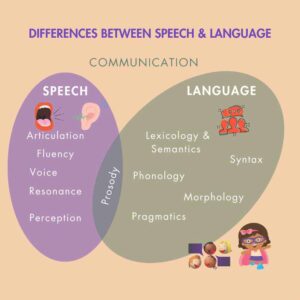
Communication is complex. I always explain on the initial assessment with all my clients that there is a distinct difference between speech and language and it is not one and the same thing. Simply put, speech is the actual act of moving our lips, tongue and jaw to produce speech sounds whereas language is the code that we use to communicate; it requires decoding (receptive language), encoding (expressive language) as well as the social use of language (our pleases, thank yous, gestures and expressions). This is why language comes in so many different variants, even the non-verbal types.
(For a proper definition of language, speech and communication you can visit www.asha.org)
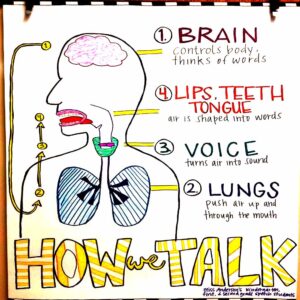
Besides the entire process of communication, the manner in which voicing occurs is nothing short of an art. The act of speaking occurs by air coming from the lungs, up the windpipe, through the voice box, and out of the mouth. The air flow causes the vocal cords to vibrate and we then shape sounds using our tongue (tip, blade, front, back), upper and lower lips, upper and lower teeth, and the roof of the mouth (alveolar ridge, palate, velum) in order to say specific sounds and words. Speech sounds differ by voice, place—where sounds are made in the mouth—and manner—the type of sound.
So, by just reading about how we typically articulate, voice, encode and decode messages, we could understand why the process of speech therapy is such a long one. Our adult clients may have problems with speech, voicing, breath support as well as encoding or decoding language, but more often they have a combination of it all. Making our jobs a little more challenging.
Our pediatric clients, are even more complex as we also need to work on their pre-linguistic skills that help to build a firm foundation for successful communication (verbal or augmented). These pre-linguistic skills are gestures, imitation, facial expressions and joint attention skills. So in a manner of speaking, it is learning how to communicate without words and just learning how to engage with you communication partner
At the initial assessment, your speech therapist gains valuable insight on where to begin therapy. But the crucial question about why it takes so very long depends on many different factors. A diagnosis helps, whether it is a stroke, a syndrome or even autism spectrum disorder but one of the most important factors is commitment from the entire team, which also includes the client and their families. Don’t be afraid to ask how you can carry over skills that have been learnt during the therapy session.
I always remind my clients that they spend 45 minutes with me per week but are engaging with their families 24/7, so the most amount of communication happens in this time. Communication isn’t confined to a speech therapy practice, it’s natural and provides the best opportunity to practice the gestures, imitation and joint attention skills for our little ones.
Yes, speech therapy does take an exceptionally lengthy time. It takes us 7 years to fully learn all our speech sounds (yes, the /th/ sound is only fully mastered at 7 years), and we’re still developing and learning language skills well into our secondary school and even tertiary learning, it is no surprise that the process of speech therapy is a long journey. But without a doubt, a worthwhile one.
I hope you’ve found the information helpful, please do share and leave a comment
Your Super Speechie
Priya